 By
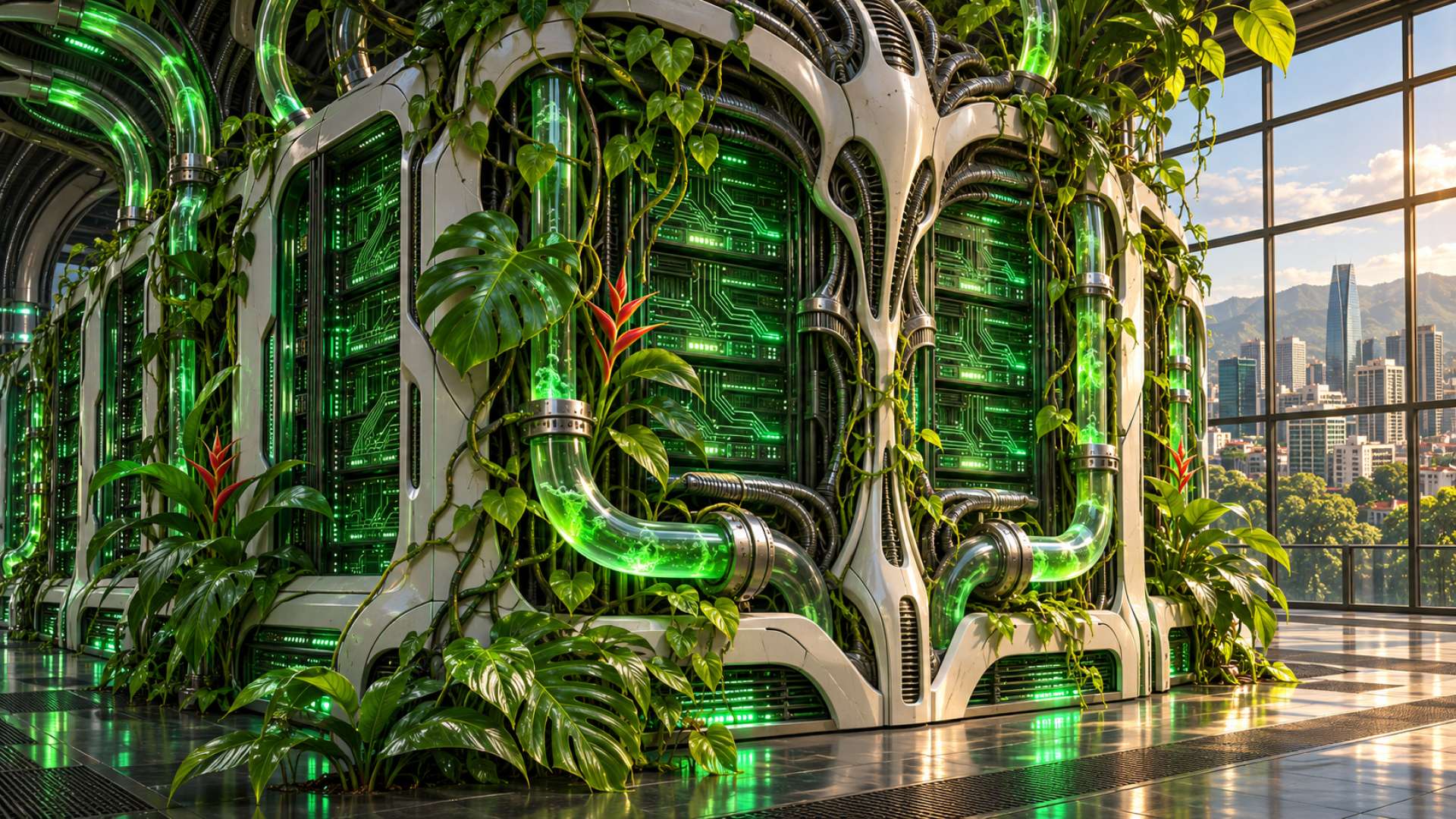
San José, Costa Rica — As artificial intelligence shifts from experimental proofs of concept to full-scale enterprise deployment, business leaders across Central and South America are encountering a stark operational reality. While early AI adoption centered on acquiring advanced language models, specialized accelerators, and raw processing power, the real bottleneck has rapidly shifted toward physical infrastructure. Sustaining high-density compute workloads requires continuous power stability, specialized thermal cooling, and sophisticated real-time monitoring capable of handling sudden load fluctuations.
In the regional market, executive focus is recalibrating from how many servers can be racked to how much processing capacity can reliably run without compromising uptime or ballooning operational costs. Without robust physical foundations, even the most expensive technology deployments risk becoming constrained asset liabilities.
To gain deeper legal insight into the evolving regulatory and investment landscape of AI infrastructure, TicosLand.com consulted with expert attorney Lic. Larry Hans Arroyo Vargas from Bufete de Costa Rica.
Developing robust AI infrastructure requires far more than physical data centers and energy grid capacity; it demands a comprehensive legal framework to address data sovereignty, cross-border information flows, and environmental compliance. As private and public sectors scale their technological capabilities, proactive regulatory strategy will be essential to mitigate liability while fostering secure and sustainable innovation.
Lic. Larry Hans Arroyo Vargas, Attorney at Law, Bufete de Costa Rica
Indeed, as the rush to expand digital capabilities accelerates, ensuring that regulatory frameworks and environmental standards evolve alongside physical infrastructure will be crucial for sustainable progress. We extend our sincere thanks to Lic. Larry Hans Arroyo Vargas for providing his invaluable legal perspective on this pivotal issue.
The critical factor is not how much infrastructure can be installed, but how much can actually operate with the performance, availability, and cost required by the business.
José Alberto Llavot, Pre-Sales Manager and Business Developer at Schneider Electric for Mexico and Central America
Industry benchmarking reinforces this shift toward pragmatic operations. Recent reports from the Uptime Institute indicate that market expectations surrounding AI-driven autonomous facilities have tempered. Operations teams are placing higher confidence in predictive maintenance and sensor analytics rather than handing total control over to autonomous systems. Furthermore, data indicates that one in ten infrastructure incidents remains classified as severe or critical, proving that software automation cannot replace resilient engineering and skilled technical personnel.
The physical requirements of generative artificial intelligence are fundamentally different from legacy IT environments. AI architectures can demand up to ten times more power per rack than traditional data center designs. Existing facilities must be comprehensively retrofitted across power distribution, backup systems, liquid cooling solutions, and physical site layouts to support these dense thermal profiles.
When power or cooling systems fail to coordinate seamlessly with digital workloads, newly acquired computing hardware quickly becomes idle capacity. A failure in any single component compromises the entire operational chain, converting expensive silicon assets into bottlenecked resources.
To mitigate these risks, infrastructure management relies increasingly on advanced digital twins and unified management software. By unifying real-time telemetry from IT systems, power grids, and cooling units, operators gain end-to-end visibility. Digital twins allow engineers to model thermal loads and capacity constraints before deploying hardware, transforming isolated data streams into actionable intelligence regarding risk management, preventative maintenance, and future expansion.
For regional enterprises navigating this transition, success requires unified coordination between IT, facilities management, energy providers, and executive leadership from the initial design phase. Projects can no longer be deemed successful simply because hardware has been installed and powered on; true maturity is reached when facilities continuously sustain variable AI loads with predictable cost efficiency.
As energy availability and grid capacity become defining factors for tech expansion across Latin America, operational discipline will separate market leaders from failed deployments. Ultimately, AI infrastructure is moving past the phase of technological novelty into an era defined by continuous availability, grid efficiency, and proven operational resilience.
For further information, visit se.com
About Schneider Electric:
Schneider Electric is a global leader in energy management and industrial automation, providing integrated digital solutions across power distribution, building management, and data centers to drive efficiency, sustainability, and operational resilience worldwide.
For further information, visit uptimeinstitute.com
About Uptime Institute:
Uptime Institute is an independent global advisory organization focused on improving the performance, efficiency, and reliability of business-critical digital infrastructure through industry certifications, research, and operational standards.
For further information, visit bufetedecostarica.com
About Bufete de Costa Rica:
Bufete de Costa Rica stands as a premier legal institution, exemplifying ethical rigor and professional mastery across every facet of its practice. Grounded in a rich history of supporting a broad spectrum of clients, the firm continuously pioneers forward-thinking strategies to navigate complex modern challenges. Crucially, its proactive drive to enhance public legal literacy underscores a profound dedication to demystifying the law, ultimately strengthening communities and cultivating an enlightened, self-reliant citizenry.